
Heavy Machinery Shifting
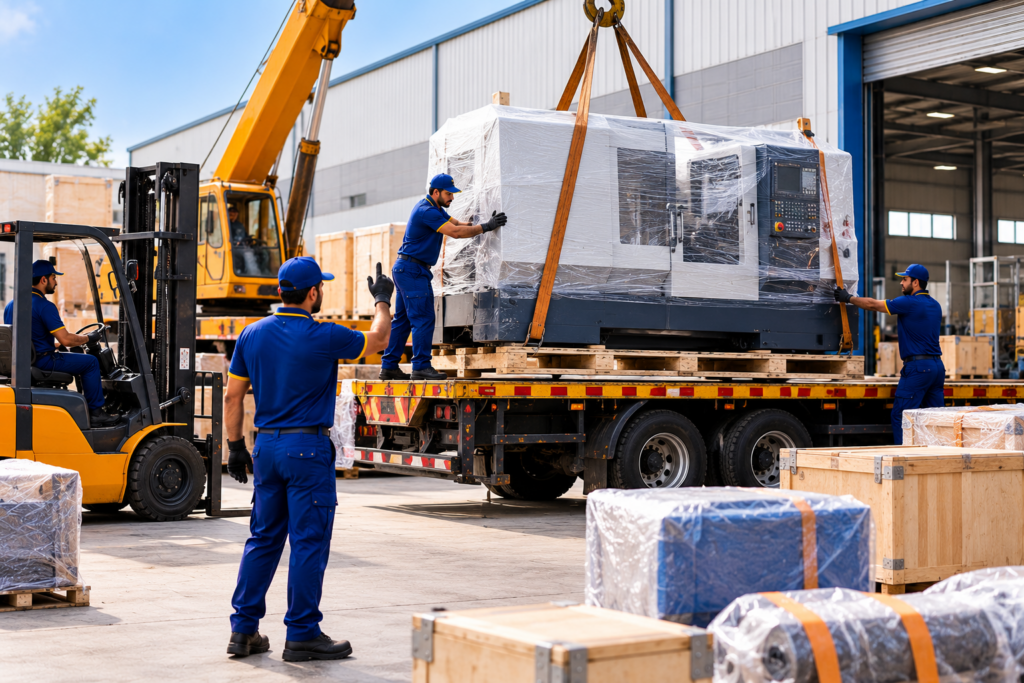
Heavy Machinery Shifting by Varuna Logistics Packers and Movers
Moving heavy machinery is a specialized operation that demands detailed preparation, suitable lifting equipment, and careful coordination at every stage. Industrial machines, manufacturing equipment, production units, generators, compressors, and other bulky assets cannot be handled in the same way as ordinary household or office belongings. Their weight, dimensions, sensitive components, and installation requirements make transportation a task that must be planned with precision. At Varuna Logistics Packers and Movers, we understand the importance of organizing machinery relocation around the specific characteristics of each piece of equipment. Our heavy machinery shifting services are designed to help businesses plan the movement of industrial assets between factories, warehouses, workshops, construction sites, and other commercial locations. By focusing on preparation, suitable handling arrangements, transportation planning, and coordinated delivery, we aim to make machinery relocation more manageable for our customers.
Specialized Planning for Industrial Machinery Relocation
Every industrial relocation begins with understanding the machinery involved and the conditions at both locations. A compact workshop machine may require a different approach from a large production unit weighing several tonnes. Dimensions, total weight, centre of gravity, detachable components, operating requirements, and transportation restrictions all influence the moving plan. The pickup and delivery sites must also be assessed for loading access, ground conditions, doorway dimensions, overhead clearance, and available space for lifting equipment. In certain situations, the relocation may require coordination with the customer’s engineering team or specialist rigging professionals. At Varuna Logistics Packers and Movers, we encourage customers to share accurate machinery details and site information in advance so the required resources and transportation arrangements can be evaluated before the move begins.
Pre-Move Inspection and Machinery Preparation
Before heavy equipment is moved, it is important to understand its existing condition and prepare it according to the manufacturer’s recommendations. Depending on the machine, preparation may involve shutting down operations, disconnecting electrical connections, isolating utilities, draining approved fluids, and removing detachable components. These activities should be performed by appropriately qualified personnel familiar with the equipment. Existing damage, loose parts, exposed components, and sensitive control systems should be identified before packing or loading. Photographs and an equipment inventory can help document the machine’s condition before dispatch. Special attention may be required for machinery containing precision parts, electronic controls, hydraulic systems, or delicate measuring instruments. Proper preparation helps reduce avoidable risks during handling and provides a clearer understanding of the work involved in the relocation.
Safe Dismantling and Component Management
Some industrial machines cannot be transported in their assembled form because of their size, weight, or shape. In such cases, partial or complete dismantling may be necessary to make transportation more practical. However, dismantling should only be carried out by qualified technicians or other suitably trained personnel, particularly when the equipment contains electrical, hydraulic, pneumatic, or precision mechanical systems. Every removed component should be identified, labelled, and packed appropriately. Fasteners, brackets, fittings, cables, and other small parts should be organized so that they can be located during reassembly. Manufacturer instructions and technical documentation should be retained throughout the process. Our heavy machinery relocation services can be coordinated around the agreed handling and transportation requirements, including the need for specialist support where dismantling and reinstallation fall outside the standard moving service.
Protective Packing for Industrial Equipment
Industrial machinery often contains exposed surfaces, precision components, control panels, and parts that can be affected by impact, dust, moisture, or unsuitable handling. The packing method should therefore be selected according to the equipment’s construction and transportation requirements. Protective covers, suitable cushioning, secure wrapping, crates, and custom supports may be considered where appropriate. Sensitive components may require additional protection, while certain machines may need moisture-control measures or specialized packaging for extended transportation. Moving parts should be secured according to manufacturer guidance, and exposed openings should be protected against contamination where necessary. Equipment with special environmental or handling requirements should be identified before packing begins. At Varuna Logistics Packers and Movers, we emphasize discussing these requirements in advance so that the proposed packing arrangements reflect the nature of the machinery and the journey involved.
Lifting Equipment and Professional Loading
Lifting and loading are among the most critical stages of a heavy machinery move. Depending on the equipment’s weight, dimensions, and configuration, the operation may require cranes, forklifts, hydraulic lifting systems, machinery skates, winches, or other suitable handling equipment. The selected method must account for the machine’s approved lifting points, weight distribution, ground conditions, and available working space. Lifting accessories should be appropriate for the load, and the operation should be managed by qualified personnel following suitable safety procedures. Unauthorized lifting points, unstable supports, or improvised handling methods can create serious hazards and damage valuable equipment. Varuna Logistics Packers and Movers aims to coordinate transportation arrangements according to the agreed scope and encourages customers to identify any specialized lifting, rigging, or site-safety requirements before confirming the relocation.
Selecting the Right Vehicle and Transportation Route
Heavy machinery cannot always be transported using a standard goods vehicle. Depending on its dimensions and weight, the shipment may require a flatbed trailer, low-bed trailer, specialized carrier, or another suitable transport arrangement. Route selection is equally important because bridges, narrow roads, overhead structures, weight restrictions, and turning limitations can affect the journey. Certain loads may require permits, escorts, or specific travel arrangements under applicable regulations. The dimensions and weight of the machinery should therefore be established accurately before transportation is scheduled. Securement systems must also be appropriate for the load and compliant with relevant transport requirements. Our industrial machinery transportation services can be planned around the equipment specifications, destination, access conditions, and agreed delivery schedule, with special transport requirements identified before dispatch.
Coordinating Delivery and Machinery Placement
Arriving at the destination does not necessarily mean the relocation is complete. The machinery must be unloaded safely and positioned in an area prepared to receive it. Customers should ensure that the destination site has suitable access, sufficient floor capacity where relevant, and enough space for lifting equipment and manoeuvring. Any foundations, mounting points, utility connections, or installation requirements should be prepared in consultation with the relevant technical specialists. The receiving team should also confirm the delivery location and access arrangements before the machinery arrives. Once the equipment has been positioned, a condition check can help identify any visible issues that require attention. Reconnection, calibration, testing, and commissioning should be handled by qualified personnel according to the manufacturer’s instructions and the customer’s operational procedures.
Minimizing Operational Disruption During Shifting
Machinery relocation can affect production schedules, warehouse operations, and project timelines. Poor coordination may lead to extended downtime or delays in restarting essential activities. Businesses can reduce these challenges by preparing a relocation schedule that considers production requirements, equipment dependencies, access restrictions, and the availability of technical teams. Where practical, machinery that is not immediately required can be moved first, while critical equipment may be scheduled around operational priorities. Employees and contractors should be informed about the planned work, particularly when lifting operations or vehicle movements affect shared areas. A clear inventory and sequence of activities can also help coordinate loading, transportation, delivery, and installation. At Varuna Logistics Packers and Movers, we encourage customers to communicate their operational priorities early so the moving arrangements can be planned around the agreed requirements.
Why Choose Varuna Logistics Packers and Movers?
Industrial equipment represents a significant investment, and its relocation requires more consideration than an ordinary goods shipment. Businesses need a clear understanding of the handling process, equipment requirements, transportation method, site conditions, estimated costs, and responsibilities of everyone involved. At Varuna Logistics Packers and Movers, we aim to support organized machinery relocation through careful planning and coordination according to the agreed service scope. We encourage customers to provide machinery specifications, photographs, approximate weight, dimensions, pickup and delivery details, and any special handling instructions before requesting a quotation. It is also important to clarify whether dismantling, specialist rigging, permits, installation, and commissioning are included or need to be arranged separately. Discussing these details beforehand helps establish realistic expectations and supports a more coordinated move.
Request a Heavy Machinery Shifting Quotation
Relocating industrial machinery successfully starts with accurate information and a practical plan. Before arranging the move, identify the equipment, confirm its dimensions and weight, review the manufacturer’s handling requirements, and assess access at both locations. Discuss the necessary lifting arrangements, packing requirements, transportation route, delivery schedule, and any specialist support that may be needed. Varuna Logistics Packers and Movers is ready to discuss your machinery relocation requirements and help you understand the available transportation arrangements. Contact our team with the equipment details, pickup address, destination, and preferred moving schedule to request a quotation. With proper preparation and coordinated handling, your business can plan its machinery shift with greater clarity while preparing the destination site for the next stage of operations.
Your Move, Made Simple: Our 4-Step Process
Contact us with your moving requirements. We assess your needs and provide a suitable relocation plan with a clear estimate.
Our team carefully packs your household goods, furniture, office equipment, and other belongings using appropriate packing materials.
We securely load your belongings and transport them to the destination with care and proper handling throughout the journey.
We deliver your belongings to the destination, unload them carefully, and help make your relocation smooth and hassle-free.
Happy Customers
Successful Moves
Years of Experience
Cities Covered